In short
- Most period sash windows can be restored rather than replaced, keeping their original slow-grown timber.
- Decayed sections are rebuilt with resin or spliced in hardwood, then the sashes are re-corded and re-weighted.
- Draught-proofing and slimline or secondary glazing bring them close to modern comfort.
- In conservation areas and listed buildings, restoration is almost always the expected route.
Sash windows are one of the defining features of period properties across Brighton & Hove. From Regency terraces to Victorian townhouses, they give a house much of its character and contribute directly to its heritage value. Many are now more than a hundred years old, and decay, draughts and poor insulation are common.
The question most homeowners face is whether to restore their sash windows or replace them. In most cases restoration is the better choice: it keeps the original timber, preserves the appearance of the house and avoids the cost of full replacement. This guide covers how sash window restoration in Brighton & Hove is carried out, how the windows can be made warmer and quieter, and when replacement genuinely is the right answer.
Why restore rather than replace?
It is often assumed that rotten sash windows must be removed and replaced, but this is rarely necessary. The timber used in period sash windows, usually slow-grown pine or oak, is far denser and more durable than most softwood available today. Properly restored, these frames can last another century.
- It preserves character. Replacement units rarely match the proportions, mouldings and craftsmanship of the originals.
- It is usually more economical. Restoring an existing window typically costs considerably less than a new hardwood sash.
- It is more sustainable. Repairing and reusing good timber keeps material in use and out of landfill.
- It suits the planning rules. Across Brighton & Hove’s conservation areas, restoration avoids the permissions often required for replacement.
When does a sash window need replacing?
Restoration is possible in most cases, but there are situations where replacement is the more sensible course:
- Severe rot, where more than half of the frame or sashes has decayed.
- Structural damage, where the frame is no longer square or movement has caused serious warping.
- Unsuitable past alterations, such as uPVC replacements in a listed building or conservation area.
- Failed glazing that cannot be repaired or upgraded within the existing sashes.
Even then, it is often possible to replace only the sashes and keep the original box frame, which reduces the cost and retains much of the window’s authenticity.
A good restoration starts with an honest survey. We will always tell you which windows can be saved and which cannot.
The sash window restoration process
A typical sash window restoration in Brighton & Hove follows a clear sequence.
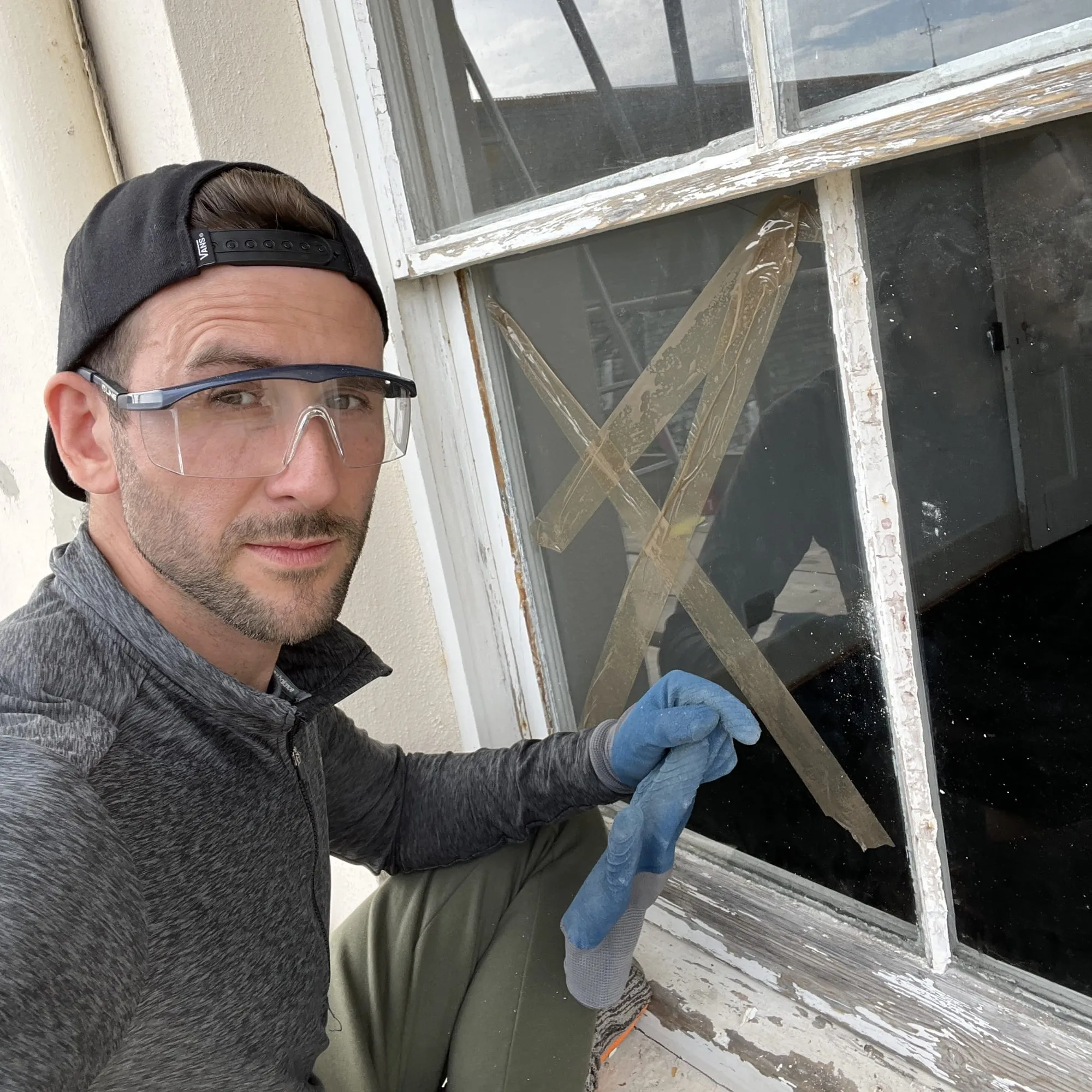
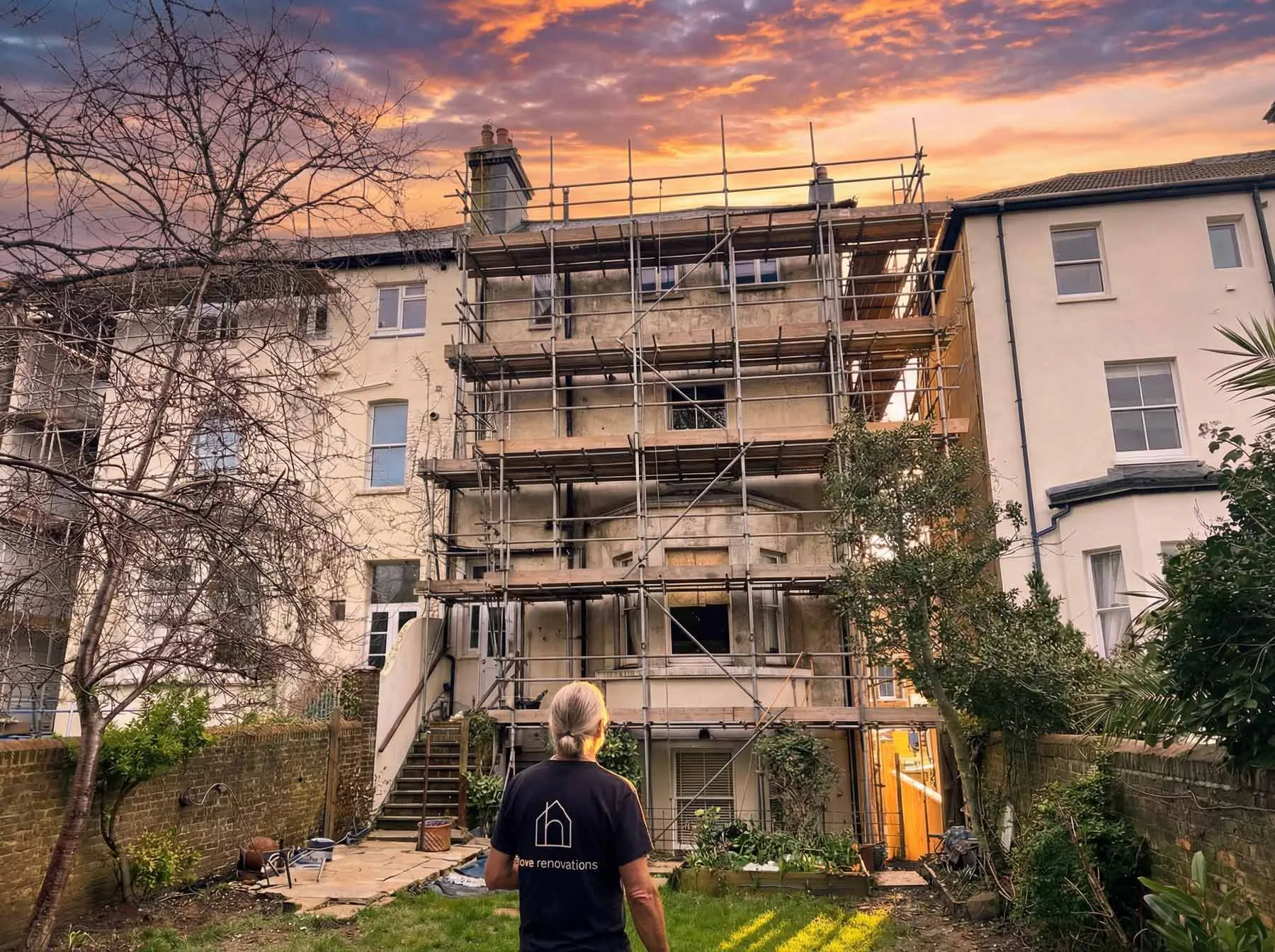
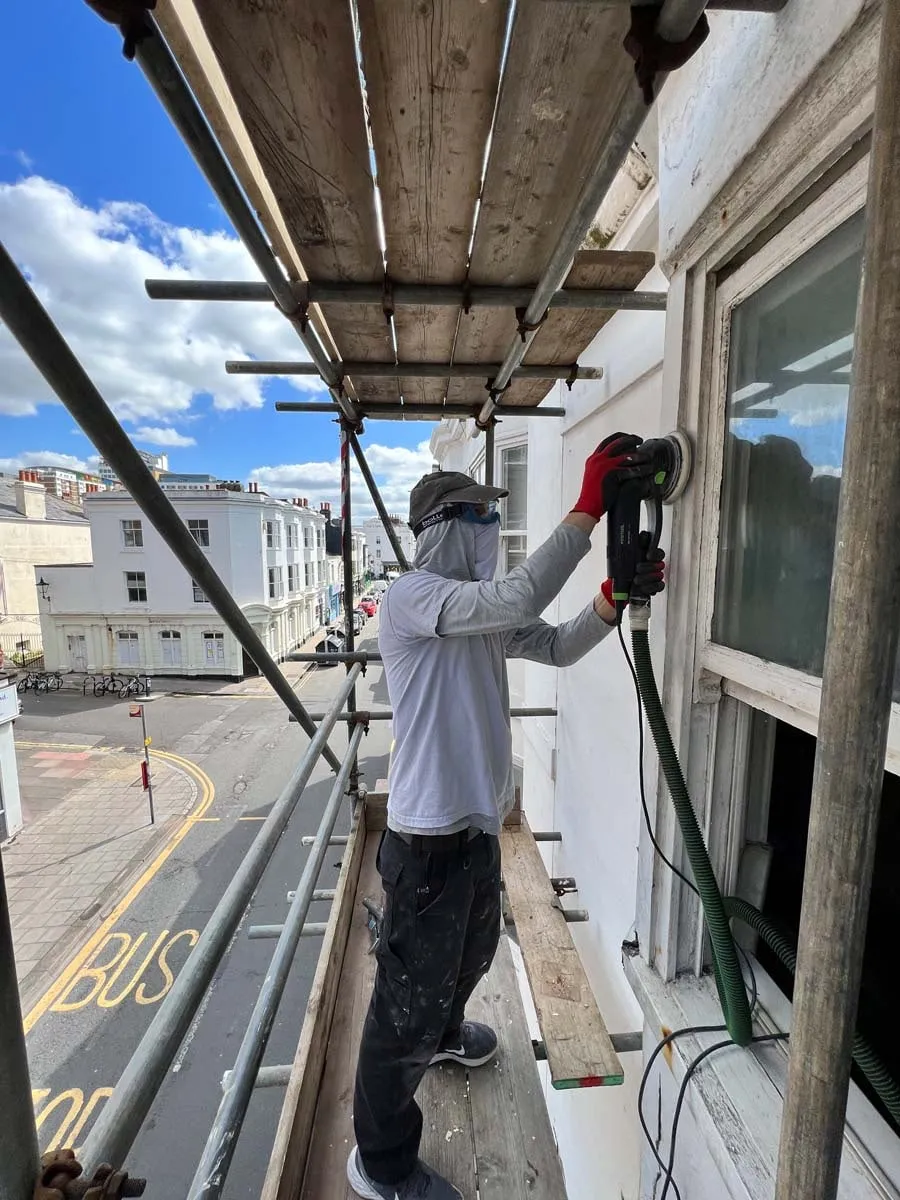 Preparing a sash window on a Brighton townhouse, working from the scaffold.
1. Initial assessment
We survey the timber, glazing, draught seals, cords and pulleys of every window. This shows whether each one needs resin repairs, splicing or new sashes, and allows the work to be planned and priced accurately.
2. Careful removal of the sashes
The upper and lower sashes are taken out of the box frame. The cords and counterweights are disconnected and kept for reuse or replacement.
3. Timber repairs
- Resin repair. A specialist epoxy resin system, such as Repair Care, rebuilds sections of decayed timber. It bonds strongly to the original wood and restores its strength.
- Hardwood splicing. Larger areas of decay are cut out and replaced with sapele, a durable hardwood well suited to long-term joinery repairs.
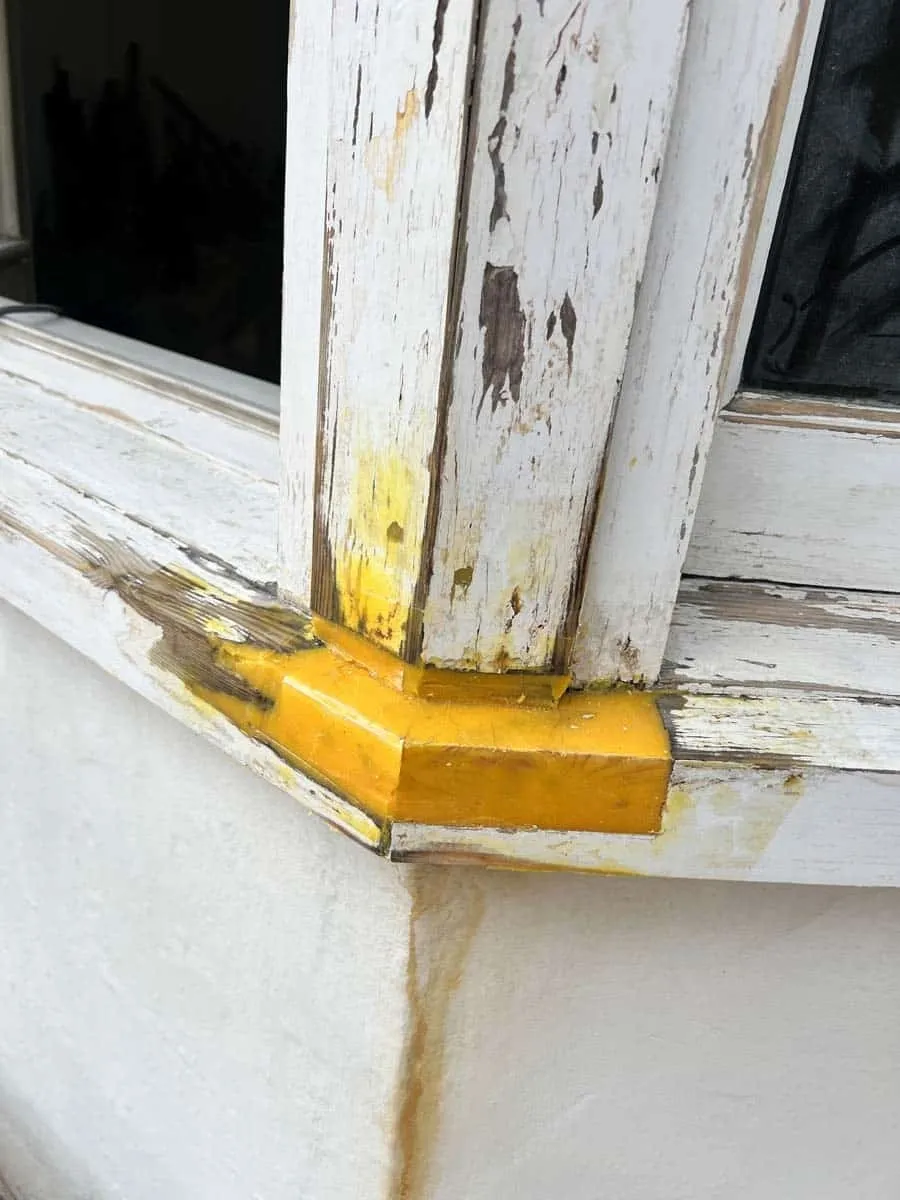 A resin repair to the corner of a sill, ready to be shaped and sanded flush.
4. Re-weighting and re-cording
Sash cords fray and snap over time, and weights go missing. New cords are fitted, the pulleys are freed and lubricated, and the weights are balanced so the sashes slide smoothly and stay where they are left.
5. Glazing and insulation upgrades
- Slimline double glazing, fitted into the existing sashes where conservation rules allow.
- Secondary glazing, a discreet inner layer that is often permitted in listed properties.
- Draught-proofing, with brush seals that greatly reduce heat loss and rattling.
6. Sanding, priming and redecoration
Once the repairs are complete, the windows are sanded back, primed and repainted. We recommend microporous paints, which let the timber breathe while protecting it from the weather.
7. Reinstallation
The restored sashes are refitted, tested for smooth movement and checked for a close, draught-free fit.
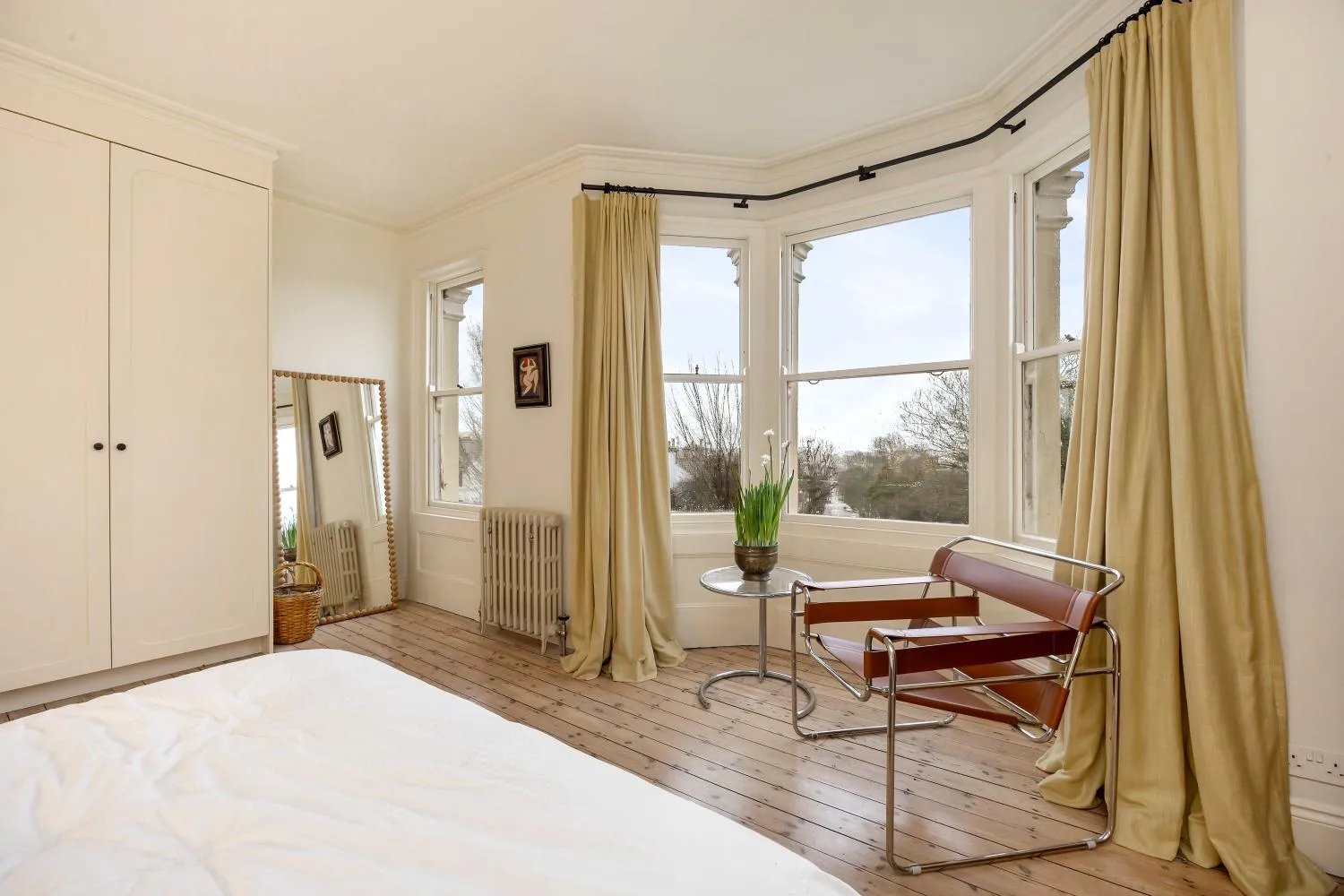
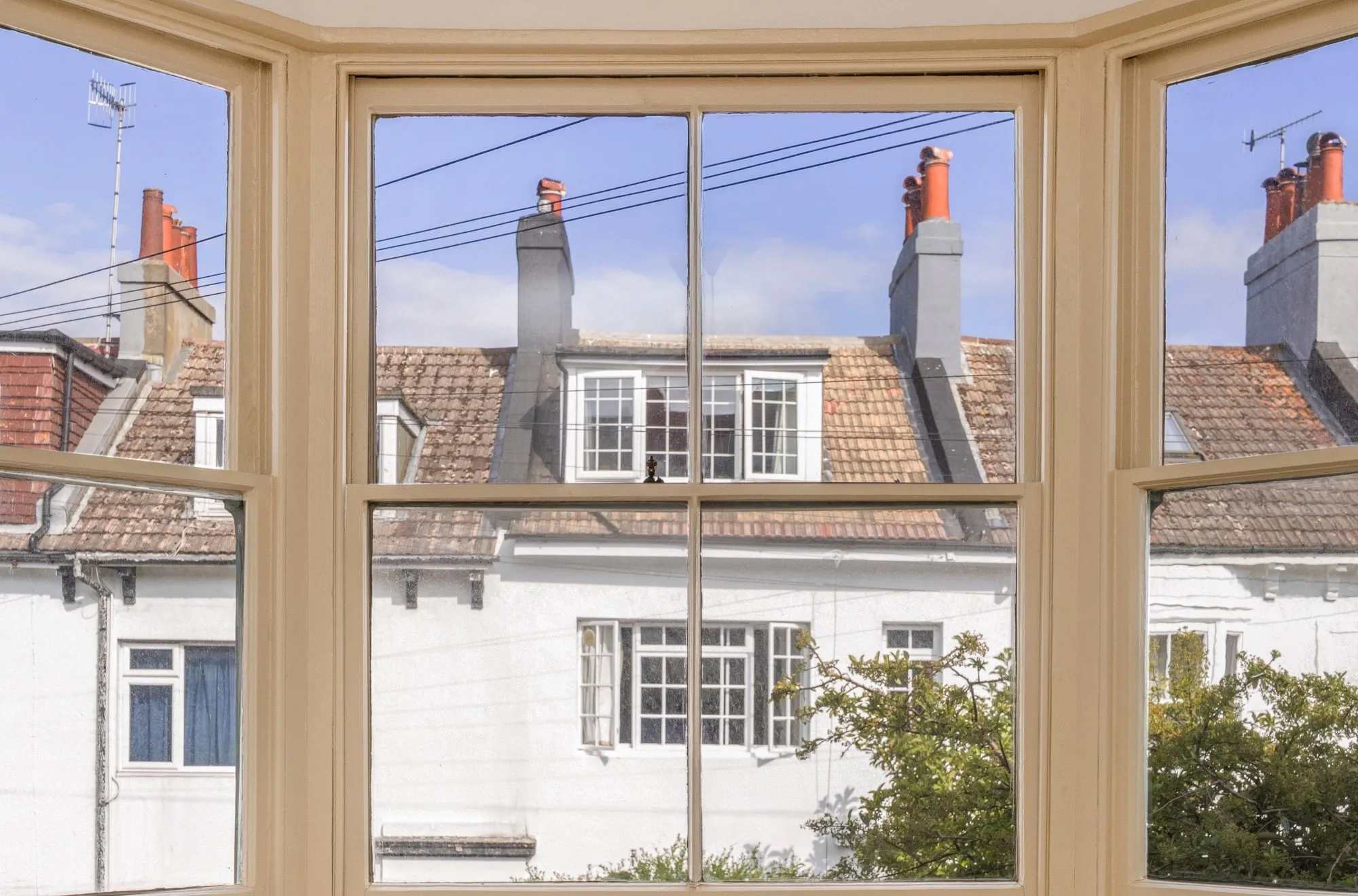
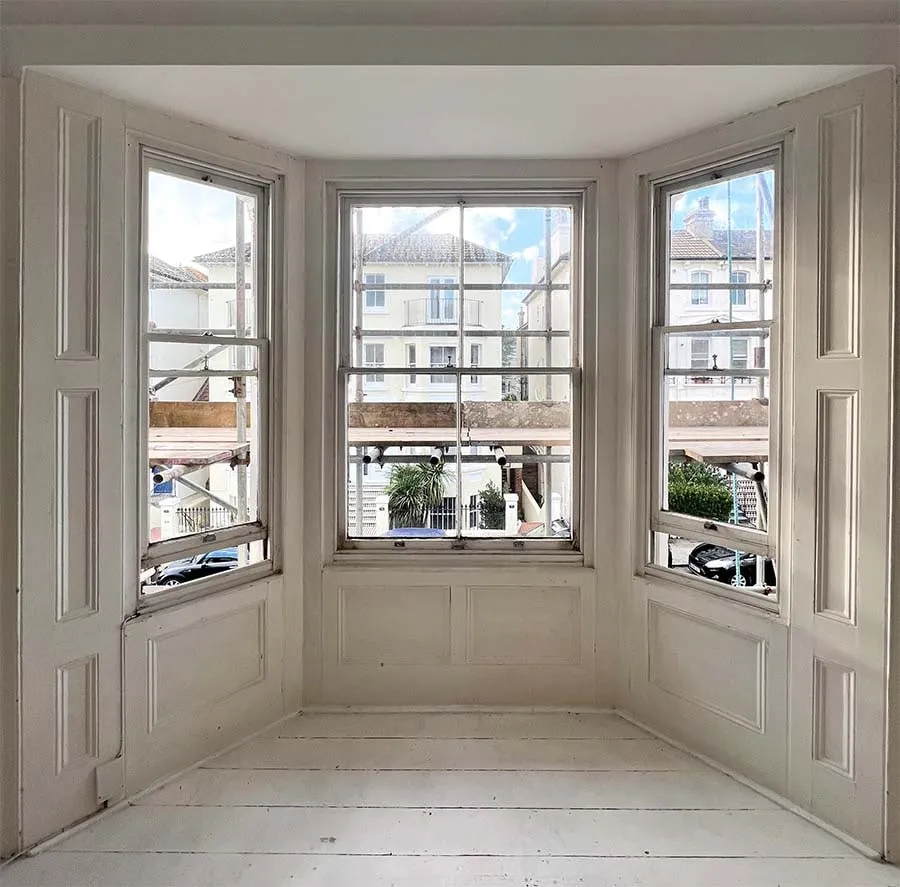 A restored bay: three sash windows re-corded, draught-proofed and redecorated.
What does sash window restoration cost?
Every window is different, so the cost depends on what each one needs. As a rough guide, per window:
- Basic overhaul and draught-proofing: £250 to £400
- Resin repairs and splicing: £350 to £600
- New sashes within the existing frame: £800 to £1,200
- A complete new sash box and window: from £1,500
Guide prices from September 2022, for illustration only. Every project is priced individually after a site visit.
The main factors that move the price are:
- Condition: how much of the timber needs resin repair or splicing, and whether any sashes need replacing.
- Size and access: larger windows, upper floors and scaffolding all affect the time involved.
- Glazing: retaining the existing glass, fitting slimline double glazing or adding secondary glazing.
- Number of windows: restoring a whole elevation at once is more efficient than one window at a time.
Compared with replacing every window in hardwood or bespoke double-glazed units, restoration can make a substantial saving across a whole house. We price each window individually after a site visit, so you can see exactly where the money goes.
Common additions during restoration
- Replacement sashes: new timber or double-glazed sashes made to fit the original box frame.
- New ironmongery: locks, lifts and fasteners that improve security and everyday use.
- Acoustic glazing: well suited to homes on busy roads and along the seafront, reducing noise while keeping the period appearance.
Heritage considerations in Brighton & Hove
Brighton & Hove has a large number of conservation areas, and many homes are listed. In these areas restoration is almost always preferred, and any change must closely match the original appearance. Traditional materials and methods, such as sapele splices and resin repairs, meet these expectations while improving the window’s performance.
In summary
If you own a period home in Brighton & Hove, restoring your sash windows is nearly always the right decision. With skilled joinery, careful resin repair and proper redecoration, even the most tired and draughty windows can be brought back into good working order. It protects the character of the house, improves comfort and offers better long-term value than replacement.
Before you replace your sash windows, explore restoration. It is usually more affordable, more sustainable and more in keeping with the architecture of Brighton & Hove.
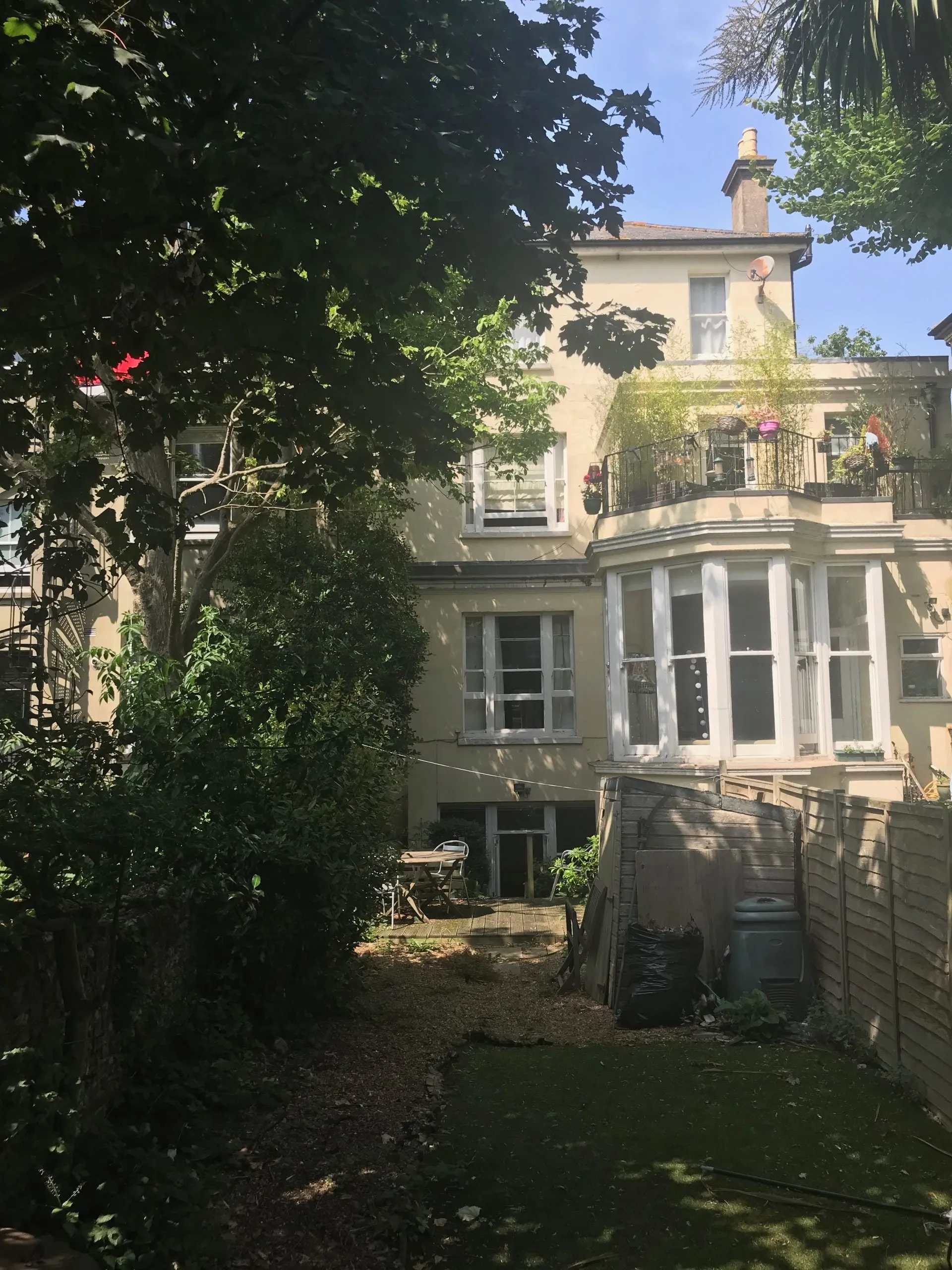
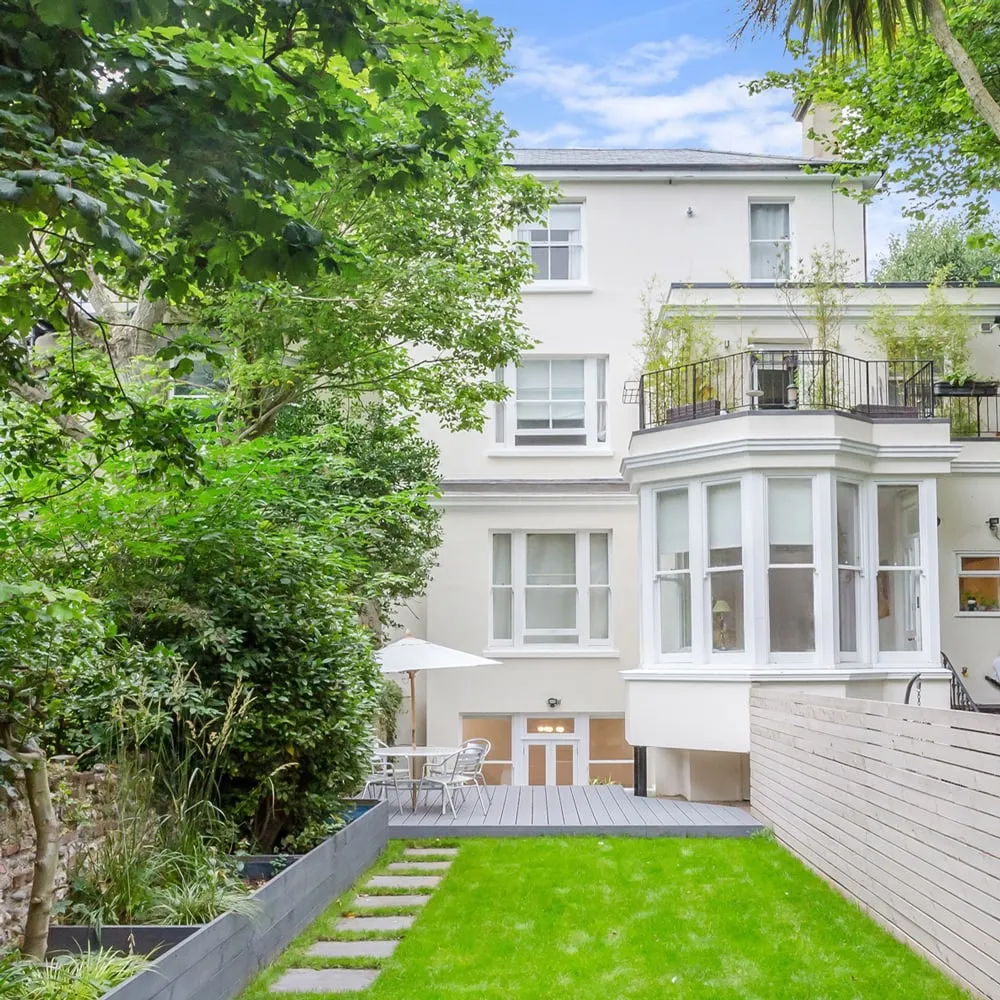
A rear elevation before and after its sash windows were restored and the house redecorated.